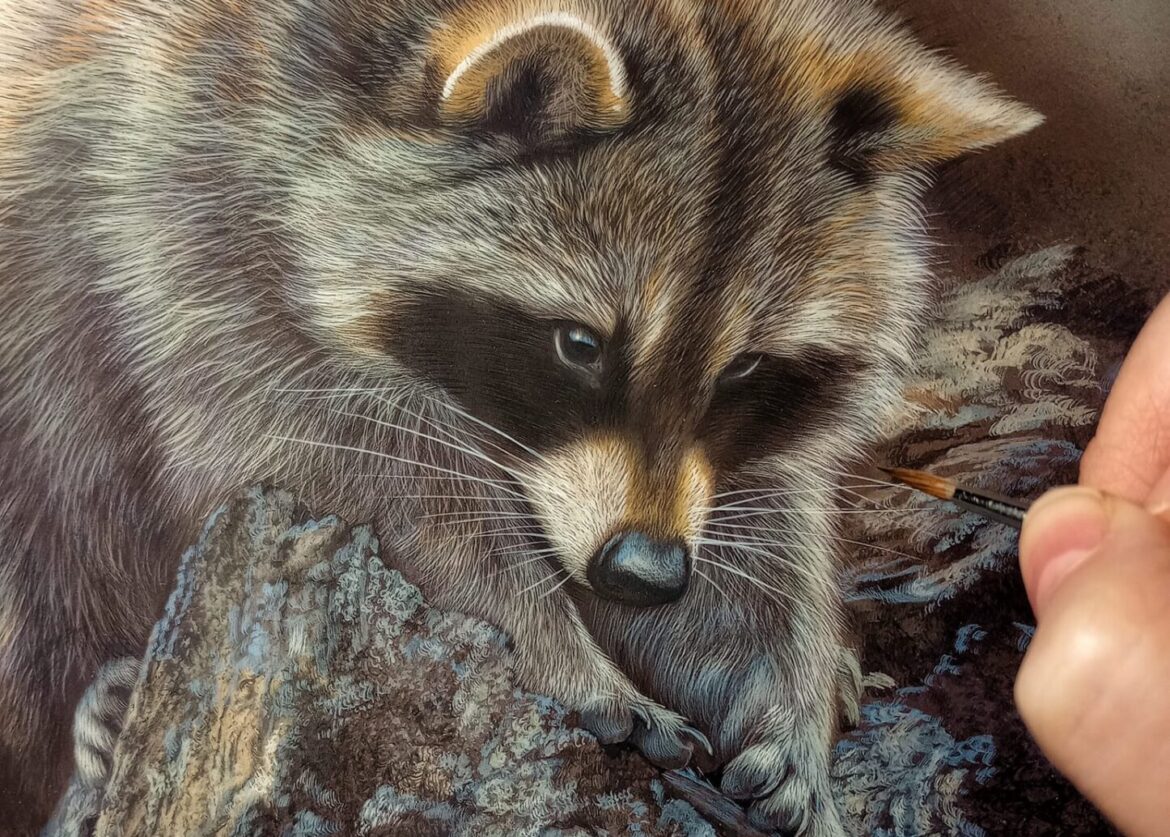
In my studio and out in the field, I’m often struck by how closely the work of a fine artist mirrors that of a naturalist. At first glance, these worlds might seem separate—one rooted in creative expression, the other in scientific inquiry. But when it comes to truly seeing and understanding the natural world, the boundaries between art and science dissolve. Both disciplines begin with a shared foundation: the power of observation.
For artists, as for naturalists, careful observation is the first and most vital step. Before I ever pick up a brush, I spend hours studying my subjects—watching the way a fox moves through the grass, the shifting patterns of light in a forest, or the subtle changes in a bird’s plumage with the seasons. This practice is not unlike the methods used by scientific illustrators and field biologists, who rely on patient, systematic observation to gather accurate information about the living world. Whether in a sketchbook or a field journal, these notes and quick studies become the building blocks for more detailed work back in the studio.
The parallels extend even further. Like naturalists, artists often document their findings through sketches, notes, and even organized inventories of species and behaviors. We track the cycles of the seasons, the nuances of weather, and the relationships between creatures and their habitats. Some of us even use tools such as GPS mapping, phenology wheels, or behavior charts to ensure our records are as precise as possible. This blend of creative and scientific documentation not only sharpens our skills but also deepens our understanding and appreciation for the complexity of the natural world.
Ultimately, both artists and naturalists are storytellers. Through our work—whether it’s a detailed painting, a field sketch, or a nature journal entry—we strive to share the wonder we experience and the insights we’ve gained. The artist’s eye and the naturalist’s curiosity are two sides of the same coin, each enriching the other. In this way, art and science come together, inviting others to look more closely, ask questions, and cultivate their own sense of wonder for the wild world around us.
For me, this intersection is where the real magic happens. It’s where creativity meets discovery, and where every brushstroke becomes a celebration of both beauty and truth.