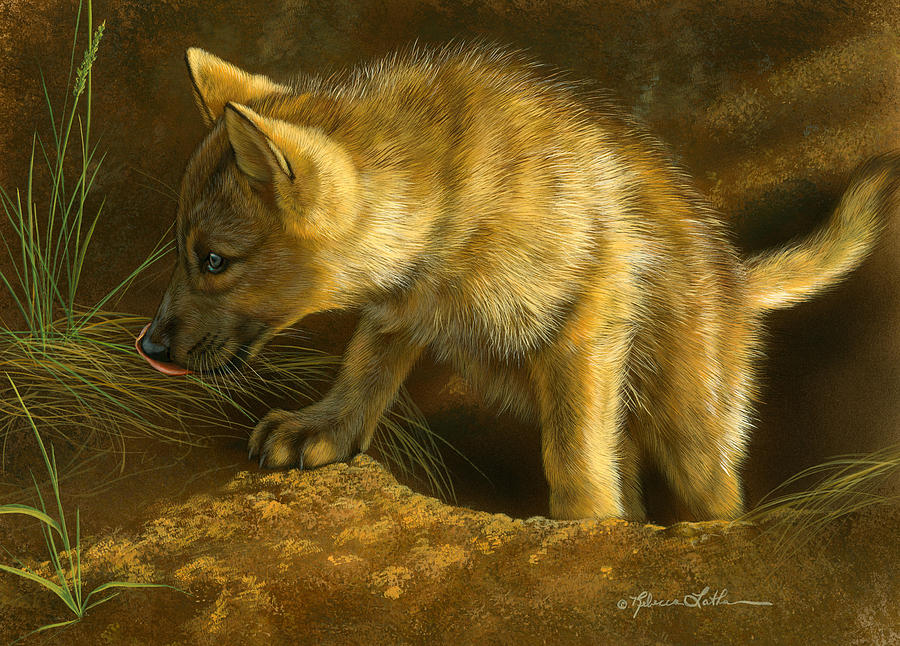
One of the greatest lessons I’ve learned as a wildlife artist is that true artistry begins not with the brush, but with the eye. The power of observation—the ability to see deeply and with intention—transforms not only the way I paint, but the way I experience the world around me. It is this practice of mindful seeing that brings authenticity, emotion, and life to my work.
When I venture into nature, sketchbook or camera in hand, I’m not just looking for inspiration—I’m searching for understanding. I spend hours watching the subtle movements of a fox, the way light shifts across a bird’s feathers, or how the landscape changes with the seasons. These moments of quiet observation teach me to notice the small details: the tension in a creature’s posture, the intricate textures of bark and leaf, the interplay of shadow and sun. By training myself to see beyond the obvious, I uncover the stories and nuances that make each subject unique.
This depth of observation is what gives realism its power. It allows me to capture not just the outward appearance of an animal or scene, but its spirit and presence. Every painting becomes more than a record—it becomes an invitation for viewers to pause, look closer, and connect with the natural world on a deeper level. I believe that when we learn to see deeply, we develop a greater sense of empathy and appreciation, both for our subjects and for the world we share.
Observation is a skill that anyone can cultivate, whether you’re an artist or simply someone who loves nature. It asks us to slow down, to be curious, and to let go of distractions. In a world that often moves too quickly, this practice is a gift—a way to rediscover wonder and to bring greater meaning to our creative work. For me, the power of observation is at the heart of every painting, and it is what continually inspires me to see, to learn, and to create with intention.