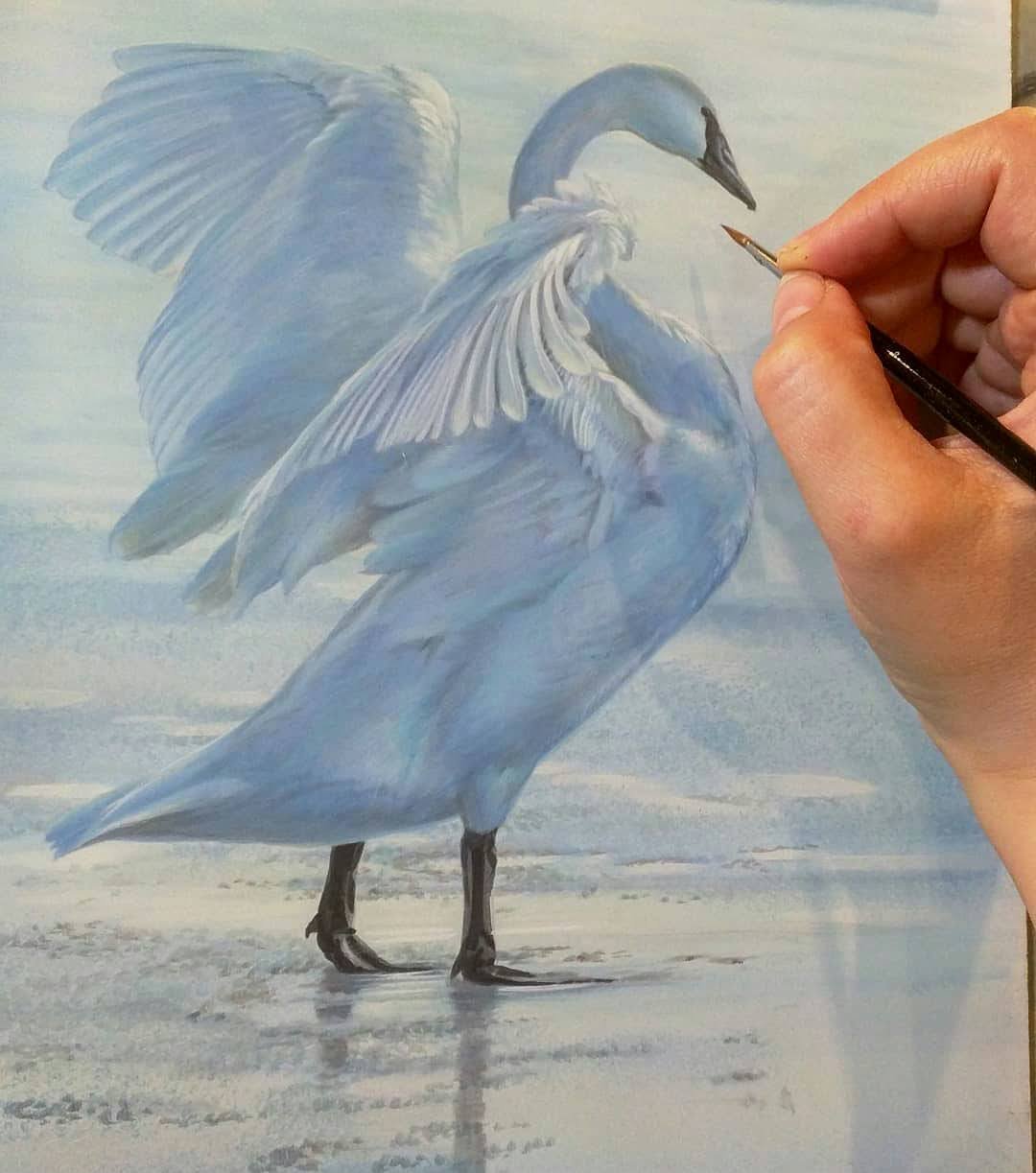
Art has long been my way of touching something deeper—the quiet soul of a creature, the fleeting light on a feather. But lately, I’ve been reflecting on how the act of creating art doesn’t just move the heart; it sharpens the mind, especially as we age. For seniors stepping into retirement, picking up a brush or pencil isn’t merely a pastime—it’s a profound act of resilience, one that recent studies show can bolster brain function and emotional strength. As someone who has spent decades painting wildlife in detail, I see this truth in my own daily rhythm: art as both solace and renewal.
A study with newly retired participants brought this into sharp focus. One group dove into hands-on art-making—painting, drawing—while another simply observed and discussed artwork. Through brain scans and resilience measures, the creators showed stronger neural connections and greater emotional steadiness. It’s no surprise to me. In my studio, every deliberate stroke demands focus: mixing a precise glaze for fur’s sheen, adjusting a shadow’s edge, solving how to capture a bird’s alert gaze. These aren’t just techniques; they weave motor skill with memory, attention, and invention.
What makes this process so alive for the brain? It’s the immersion—the “flow” of losing yourself in a creative world. Following an animal’s anatomy, interpreting light through wet feathers, finding your own voice in the marks—these pull you fully present. For seniors, this counters the fog of aging with purpose. Think of artists like Picasso or Matisse, who painted fiercely into their later decades; their work wasn’t decline but defiance, a testament to creativity’s sustaining fire.
In my own life, art has been this anchor. The patience of rendering a fox’s whisker or a loon’s iridescent neck keeps my mind lithe, my spirit steady. It offers what words can’t: a sense of agency, of making something enduring from observation and care. As habitats shift and years accumulate, this practice feels vital—not decorative, but vital.
For anyone later in life, I’d say: let art be your companion. Whether a broad landscape or a tiny wildlife portrait, the making matters more than the mastery. It nurtures the mind, rekindles wonder, and reminds us we’re still creators. In a world that rushes past the subtle, art invites us to slow, to see, and to thrive.
http://m.huffpost.com/us/entry/5567050
Leave a Reply