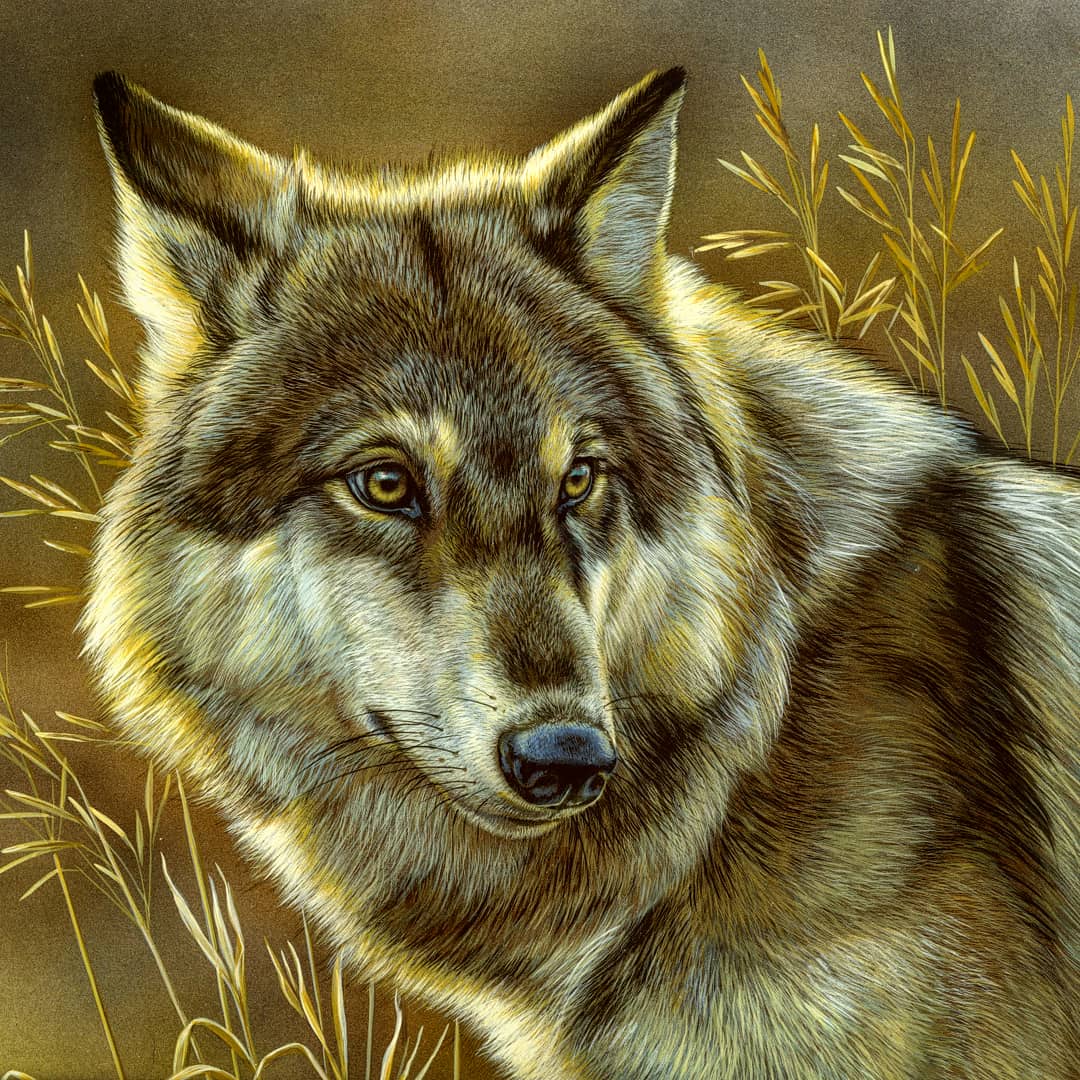
There’s a form of accuracy that can’t be measured by proportion or line. It lives somewhere deeper – an alignment between emotion and observation that gives a painting its quiet truth. In wildlife art, that accuracy is as vital as any technical skill, because what moves us most in a piece isn’t perfection – it’s presence.
The longer I paint, the more I realize that faithful representation alone isn’t enough. Precision honors the creature’s form; empathy honors its spirit. Both are needed. To see an animal clearly, you must first feel its calm, its alertness, its way of belonging to the world. That awareness changes how your hand moves, how light is placed, how stillness is expressed.
I often begin by studying – the structure of wing bones, the way fur bends across a shoulder – but somewhere along the way, emotion enters quietly and starts to guide the process. It’s in those moments that the painting begins to breathe. The analytical part of the mind keeps watch from a respectful distance, while intuition translates what the heart understands long before the brush arrives.
Accuracy, then, becomes something expanded: a harmony between knowledge and feeling. The lines remain true, but they also carry compassion. The color sits correctly in light, but it also holds memory. This is what allows a viewer to sense not only the life of the subject, but the devotion behind it.
In the end, every finished piece is a record of empathy and connection as much as it is of observation – a delicate meeting of precision and care. To paint with accuracy of the heart is to see fully, feel deeply, and offer that understanding back to the world through quiet attention. And perhaps that is the balance art is always teaching us: that truth is found not in choosing between skill or sensitivity, but in allowing both to move as one.
Accuracy of the Heart: Where emotion refines precision
Discover more from Rebecca Latham
Subscribe to get the latest posts sent to your email.