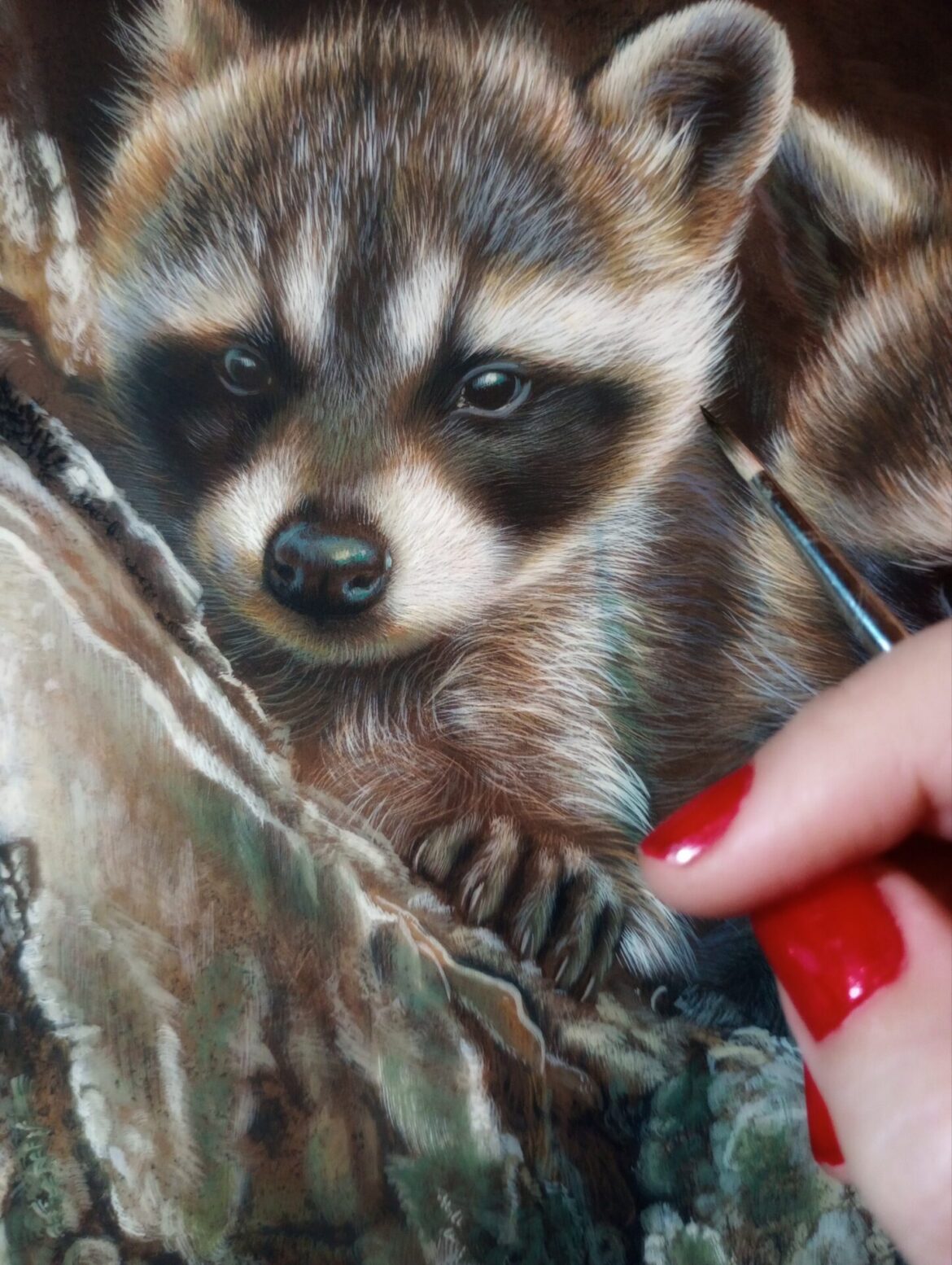
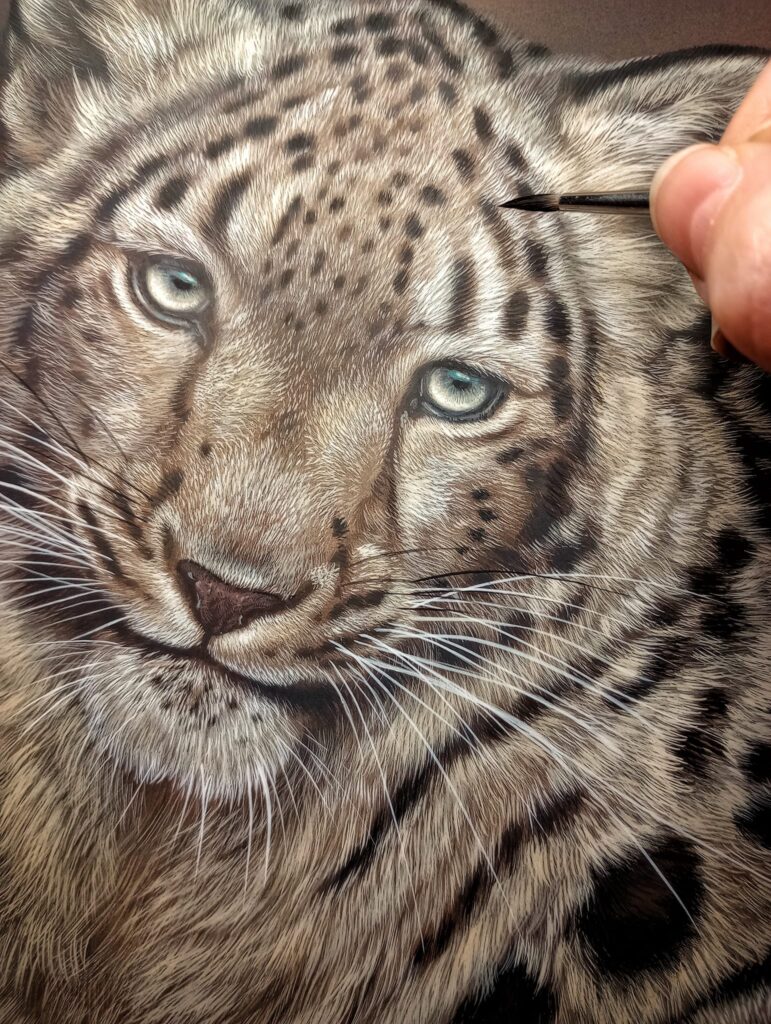
Art has a way of changing how we engage with the world. It isn’t just about technique or creating a beautiful image—it’s about perception. It’s about learning to see beyond the obvious, to notice the quiet details, to understand the deeper story within a subject.
When I paint, I’m not just replicating form—I’m interpreting movement, emotion, and light in a way that makes the subject feel alive. Observation is at the heart of this process. It transforms what might seem ordinary into something meaningful, allowing me to translate fleeting moments into lasting impressions.
A fox standing in the golden glow of evening isn’t just a shape against the landscape—it carries weight in its stance, awareness in its posture, and instinct in its gaze. A raptor’s wings don’t simply spread in flight—they hold tension, control, and mastery over the sky. These are the elements that bring realism to life—not just detail for the sake of accuracy, but detail with purpose.
The more I work in realism, the more I find that nature is never truly still. Even in the quietest moments, movement lingers—whether in the slow shift of shadows, the delicate ripple of water, or the way an animal adjusts to its surroundings with effortless precision.
Painting is a lesson in patience. It teaches me to slow down, to take in the subtleties of light, to notice the way color shifts across surfaces. It reminds me that observation isn’t just about looking—it’s about engaging, about understanding, about recognizing the beauty in what might otherwise go unnoticed.
Over time, this way of seeing changes everything. I find myself noticing how the branches of a tree frame the sky, how the patterns of fur catch light differently with each brushstroke, how emotion is carried not just in expression but in the posture and movement of a subject. The smallest details become part of the bigger story.
And perhaps that’s what realism is really about—not just the ability to recreate an image, but the ability to preserve the experience, the atmosphere, and the presence of nature in a way that stays with the viewer long after they’ve walked away.