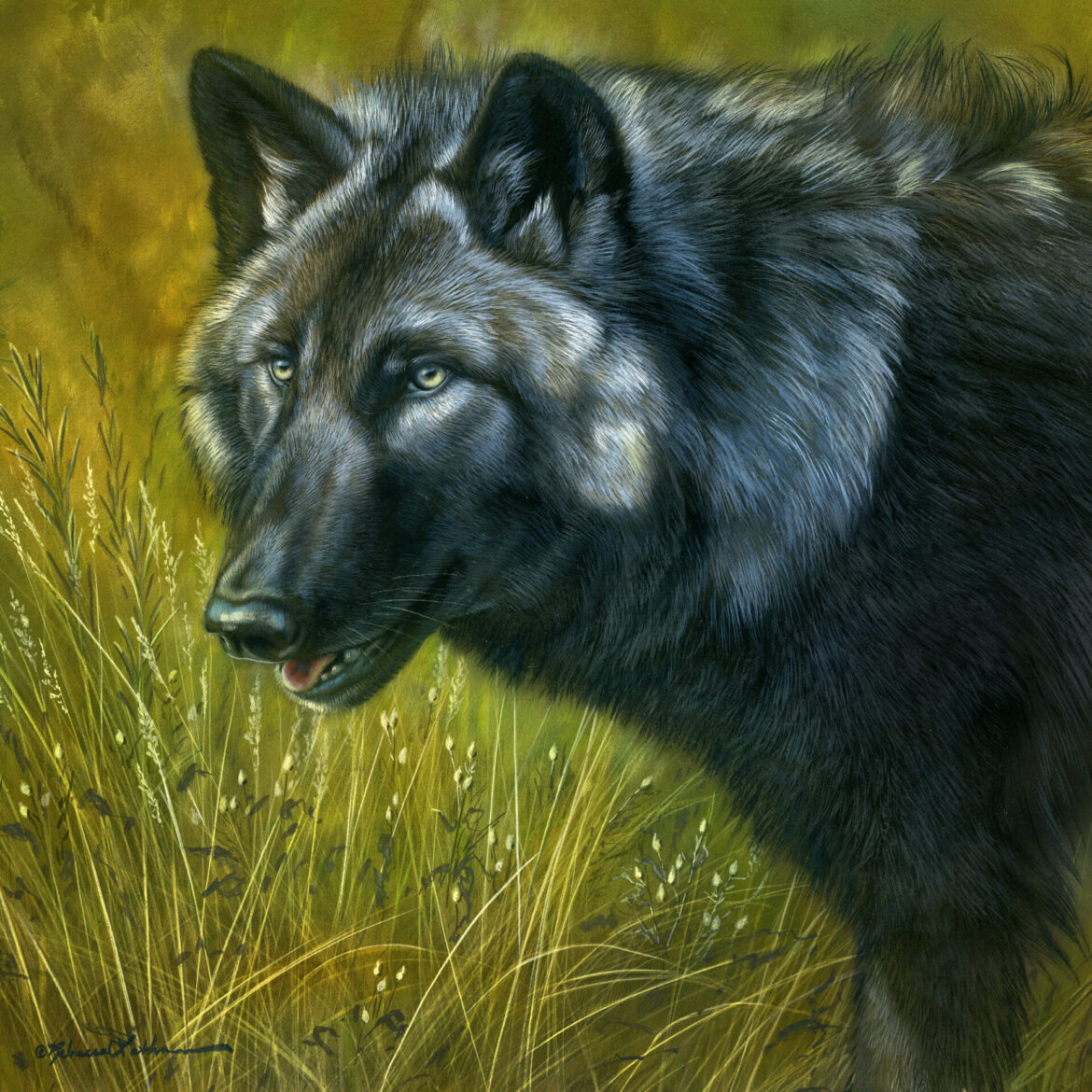
Gratitude, for me, often arrives in small, quiet moments. It’s in the hush of early morning when the world is still blue and soft, or in the pause between a bird’s wingbeats over water. When I look back at my life and my work, what stands out most is not a particular painting or achievement, but the simple, enduring gift of having spent so much time close to the wild. That closeness has shaped not only my art, but the way I see and move through the world.
From a young age, I was taught to really look—to notice the posture a deer, the way light threads through feathers, the texture of moss on a rock. Those observations began as curiosity, but over time they became a form of reverence. Being near wildlife, whether in deep woods, along a lake, or in a quiet field, has never felt ordinary to me. It always feels like being welcomed, briefly, into someone else’s home. My paintings are, in many ways, thank-you notes for those invitations.
Spending so much of my life close to the wild has also grounded me in a sense of humility. There is always more to learn, more to understand, more to respect. Animals do not perform on cue, and they don’t exist for our convenience; they live by their own rhythms and needs. When I’m out gathering reference or simply watching, I’m reminded that I am a guest. That awareness makes its way into the studio. It’s why I labor over tiny details in a miniature painting—the shine of an eye, the edge of a whisker—because it feels like a way to honor the life that inspired it.
Gratitude also appears in the emotional threads that connect viewers to the work. When someone tells me a painting reminds them of childhood walks in the woods, or a single unforgettable encounter with a wild creature, I feel deeply thankful. Those shared stories are a reminder that the wild touches many lives, often in quiet and personal ways. My role is simply to offer a small window back into that feeling—a moment of recognition, of tenderness, of remembering what we love.
Of course, there is a bittersweet side to this closeness as well. Many of the species and habitats I paint are vulnerable or changing. Bearing witness to their beauty carries an awareness of their fragility. My gratitude for them is intertwined with concern and a desire to protect what can still be protected. That’s part of why I continue to paint—because each piece can serve as a gentle reminder of what is at stake, and of how precious these lives and landscapes really are.
When I step into my studio and lay out my brushes, I often think about how extraordinary it is that my days are filled with animals and wild places, even when I’m indoors. To spend a life studying the curve of a wing, the intelligence in an eye, the subtle differences in fur and feather—this is not something I take for granted. It is a privilege and a blessing.
In the end, my gratitude for a life spent close to the wild is not a single feeling, but a continuous, quiet current running beneath everything I do. It flows through the long hours of careful detail, through the early mornings in the field, through the stories shared by those who connect with the paintings. It reminds me that every encounter with the natural world is a rare privilege—one I strive to reflect with unwavering reverence and care.