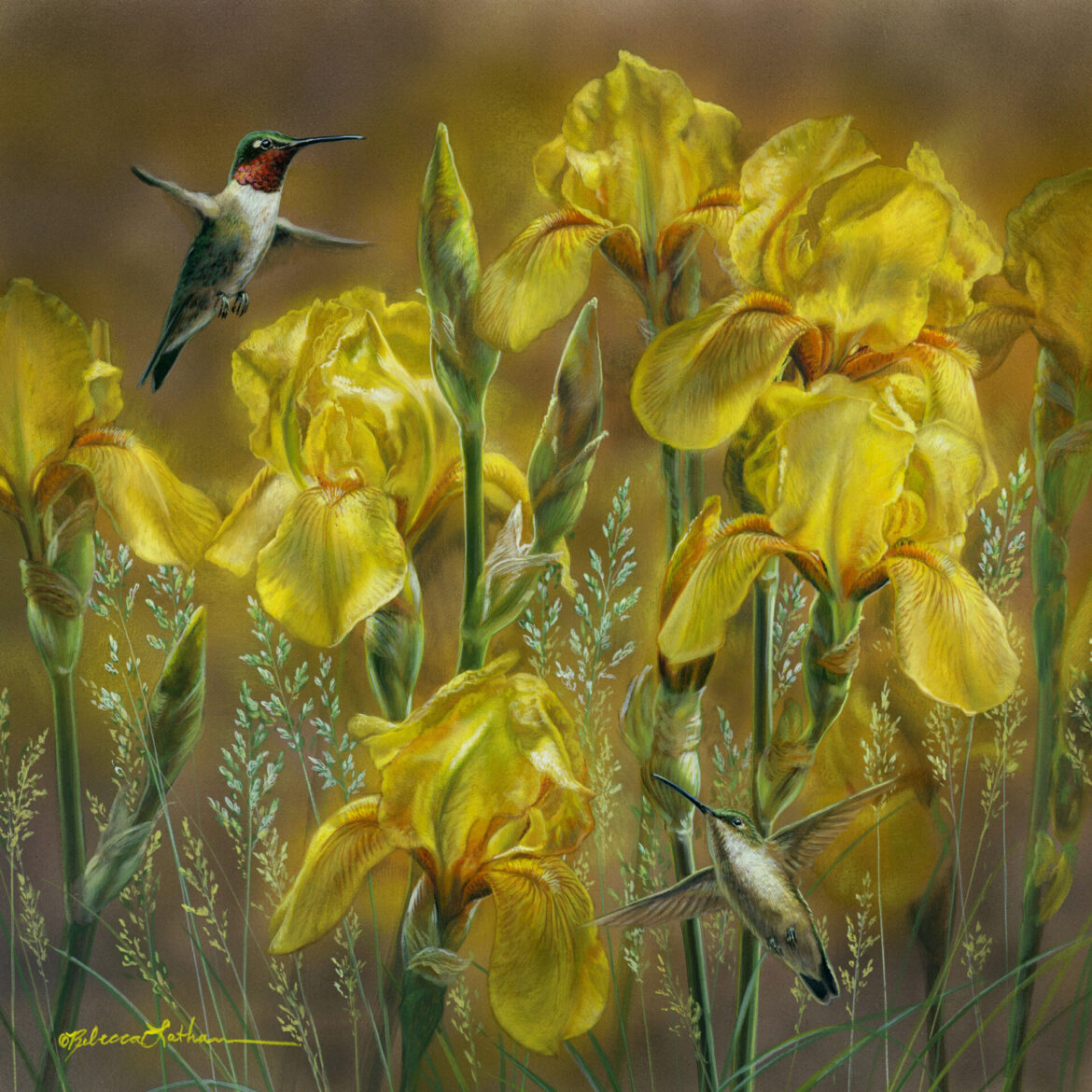
Miniature painting, with its demand for fine, delicate detail, is far more than a technical challenge—it’s a lens that reveals the natural world’s endless layers. In life, the closer you look, the more there is to see: a fox’s whisker reveals not just taper and curve, but the way it quivers with each breath, sensing the air. A songbird’s feather holds iridescent shifts, subtle barbs, and light play that shift with every angle. My paintings reflect this truth—each tiny panel invites that same nearness, unfolding nature’s complexity for those who lean in.
The process mirrors nature’s own patient rhythm. A single eye might take hours: observing moisture at its edge, intelligence flickering in the pupil, the living glint that speaks of awareness. Rushing flattens it all; slowing down uncovers vitality. Wildlife reveals itself slowly—a deer’s ear twitches for reasons tied to wind, sound, instinct; bark textures cradle plumage just so. Miniatures demand that attentiveness, training us to read the environment’s quiet signals and grasp the web of interdependence.
Through this intimate scale, vulnerability emerges too. A dragonfly’s veined wing, true to size, lays bare its fragility—one errant brushstroke, and the spell breaks. It echoes how wild lives hang in delicate balance amid habitat loss; these details aren’t adornment but proof of adaptation’s precision. Viewers drawn close to my work often fall quiet in awe, pulled into that shared intimacy.
In my studio, these tiny worlds have reshaped how I see everything—not as backdrop, but as a tapestry of exquisite intricacy. Miniature painting teaches us to look longer, care deeper, and cherish what thrives in the smallest measures. It whispers: true wonder isn’t in scale, but in the endless discovery of drawing near.