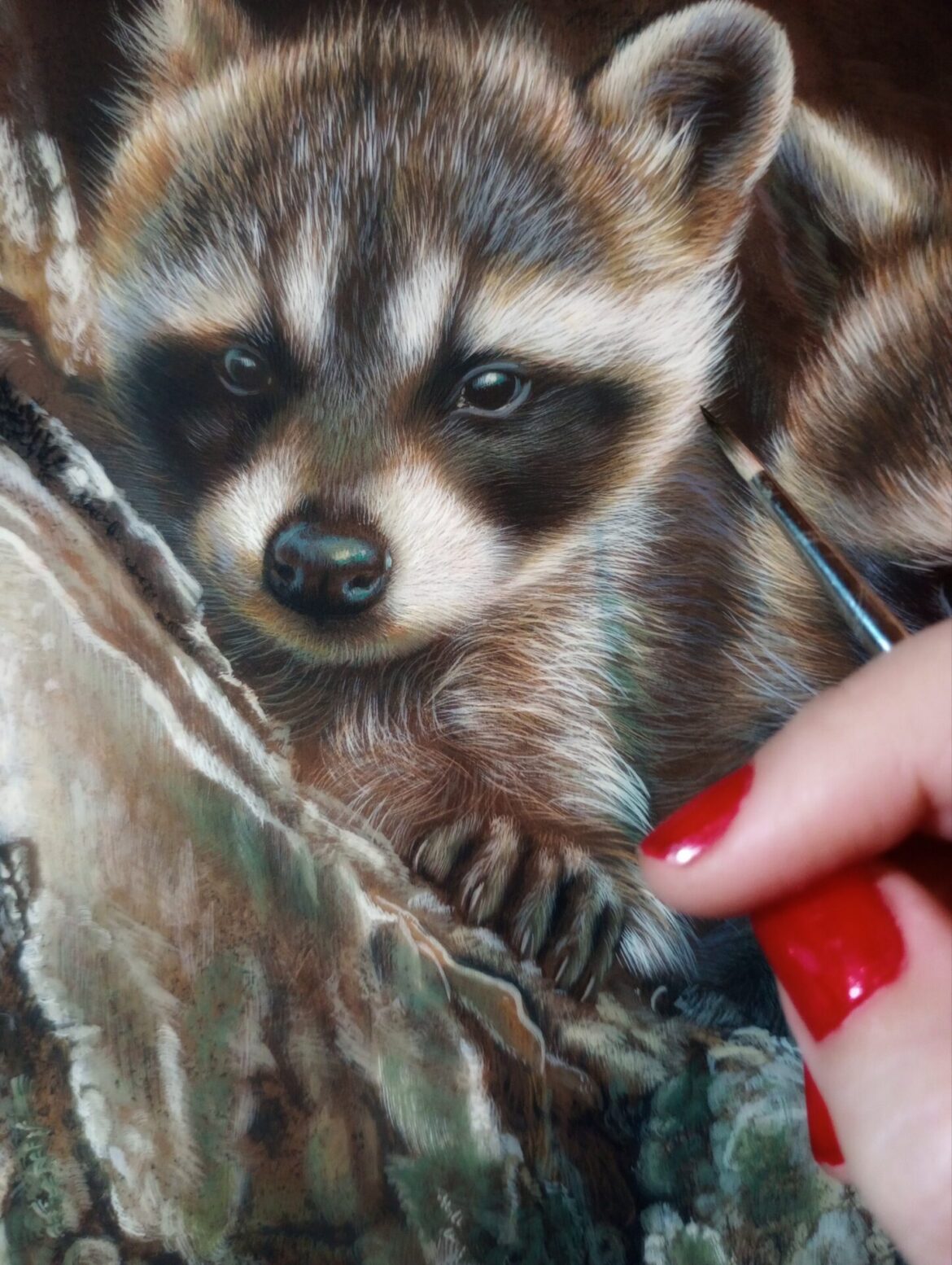
Every painting begins with a moment of stillness—a flicker of recognition between artist and subject. For me, that moment is where the real work begins. The meaning of naturalism isn’t found in copying what I see, but in understanding how it feels to witness it. To capture something truly—to let it breathe on paper—I have to slow down, look longer, and listen deeper.
When I’m painting, I think less about shapes and more about rhythm. The rhythm of sunlight through feathers, the soft exchange between wind and leaf, the quiet persistence of life going on all around us. These are the stories I try to tell. A painting succeeds, I think, not when it looks real but when it feels alive.
That pursuit demands intention. It means making hundreds of small, careful decisions, but never losing sight of the wonder that started the piece in the first place. Some days, the brush moves easily; others, it resists—reminding me that collaboration with the medium is part of the process. Each layer of paint is both discovery and surrender, each detail a reminder of how much there is to learn.
Naturalism, to me, is grounded in gratitude. It’s awareness turned into art—an act of witnessing the rare in the everyday. Whether it’s a bird pausing in the garden or the evening light slipping through a window, life reveals countless small miracles if we take time to notice them. Through painting, I get to honor those moments, to hold them still for just a little while.
That’s what keeps me at the easel day after day—the hope that someone looking at my work might also pause, breathe, and feel a small spark of connection to the wild world that surrounds us all.