Every painting begins with a conversation. Sometimes it starts with a quiet spark of intuition—a glimpse of color, a fleeting movement in the wild that stirs an idea before the mind can even name it. At other times, it begins with deliberate study—research, sketches, and the long process of understanding anatomy, light, and form. True balance in art, I’ve found, doesn’t exist in choosing one over the other, but in listening when each has something important to say.
Intuition is the heartbeat of creativity. It’s the sense of energy that compels us to pick up the brush before we’ve fully thought through why. In wildlife art, this instinct often arises in the field—seeing how light glances across feathers, or how an animal’s motion echoes through its surroundings. These first impressions are emotional before they are technical. They are what give the future painting its pulse.
But intuition alone is untethered without precision. Observation and skill anchor inspiration, allowing that first spark to take lasting form. The smallest nuances—a shift in temperature within shadow, the tension in musculature before movement—demand patient accuracy. Precision is where respect shows itself: where the artist’s responsibility to truth meets the freedom of interpretation.
There’s a point in the painting process where both instincts meet, neither dominating. The brush knows its path because the hand has practiced discipline, yet the hand allows unexpected turns because the heart remains open. That merging is the true dialogue—moment by moment, decision by decision, until the subject begins to breathe on the paper.
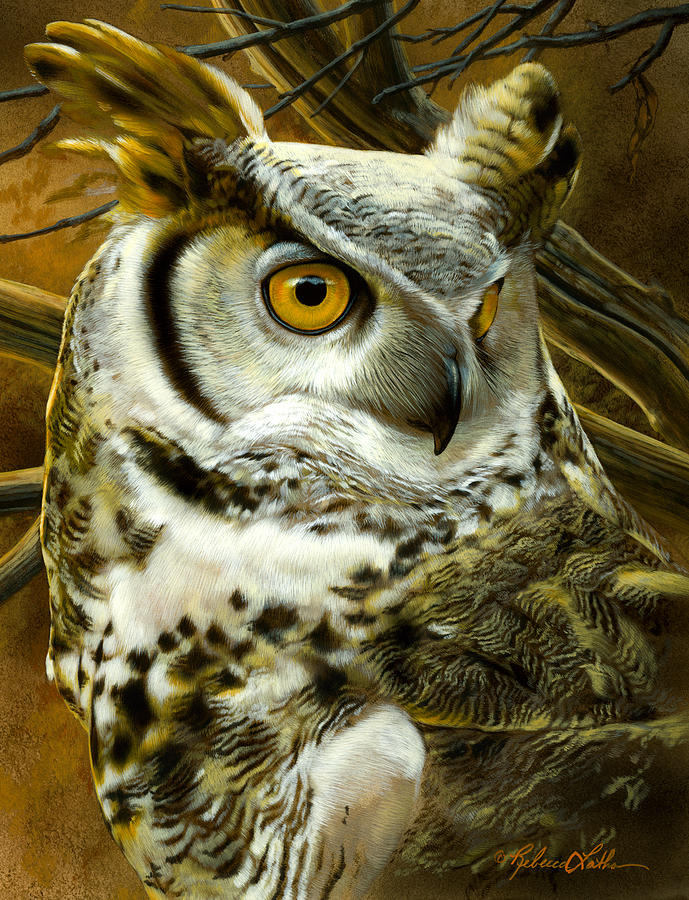
Every finished work carries this balance quietly within it. You can sense it in fine edges that hold emotion, and in looser passages that still feel intentional. A bird’s wing, precise yet full of motion; an eye, exact yet luminous with expression. To paint wildlife well is to walk that narrow line between accuracy and instinct—between what the mind knows and what the soul feels.
In the end, intuition doesn’t oppose discipline; it completes it. The dialogue between the two is what makes the work whole. When both speak together, the result isn’t just a likeness, but life itself—captured, understood, and felt.
The Dialogue Between Instinct and Detail: How intuition and precision work together in wildlife art
Discover more from Rebecca Latham
Subscribe to get the latest posts sent to your email.